




Resource Center
Communication and sharing promote growth
Joining Hands for Development!
Communication and sharing promote growth
Joining Hands for Development!


Against the backdrop of surging AI compute demand and chip power consumption exceeding 2000W, every shift in liquid cooling technology roadmaps reshapes the deployment rhythm of the entire supply chain. Recently, NVIDIA’s Rubin series shipment share and production ramp have been adjusted downward, buying mature cold plate liquid cooling a critical extension window and clarifying a development path of “short‑term deep execution, long‑term strategic reserve.”
1. Rubin Share Cut + Ramp Slowdown: A 2–3 Year Window for Cold Plate Cooling
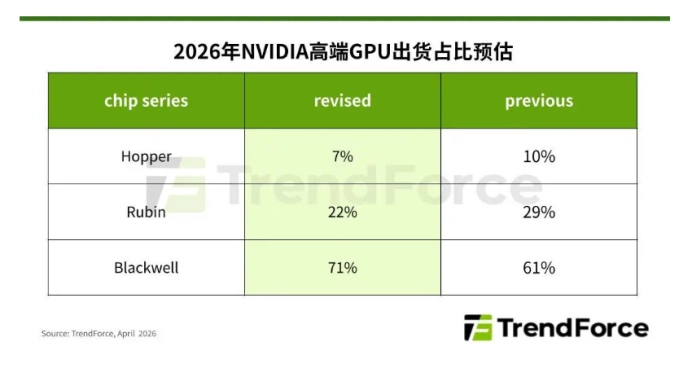
According to TrendForce’s AI Server survey (April 8, 2026), the Rubin series’ share of NVIDIA’s high‑end GPU shipments in 2026 is revised from the initial estimate of 29% down to 22%, while Blackwell rises to 71% as the dominant platform. Separately, KeyBanc research indicates that Rubin GPU production targets for 2026 have been lowered from 2 million units to 1.5 million – a 25% reduction.
Important clarification: NVIDIA has officially confirmed that Rubin remains on schedule for a 2H 2026 launch. The “delay” is thus primarily a matter of share and volume, with the real impact being a meaningful postponement of the mass deployment of 2000W+ high‑power chips.
Current GB300 GPUs consume around 1400W, well within the capability of cold plate liquid cooling. The reduced Rubin share means that cold plate cooling will remain the mainstream solution through 2026–2027, effectively extending its life cycle by 2–3 years.
2. Challenges and Optimisation Opportunities Beyond 2000W
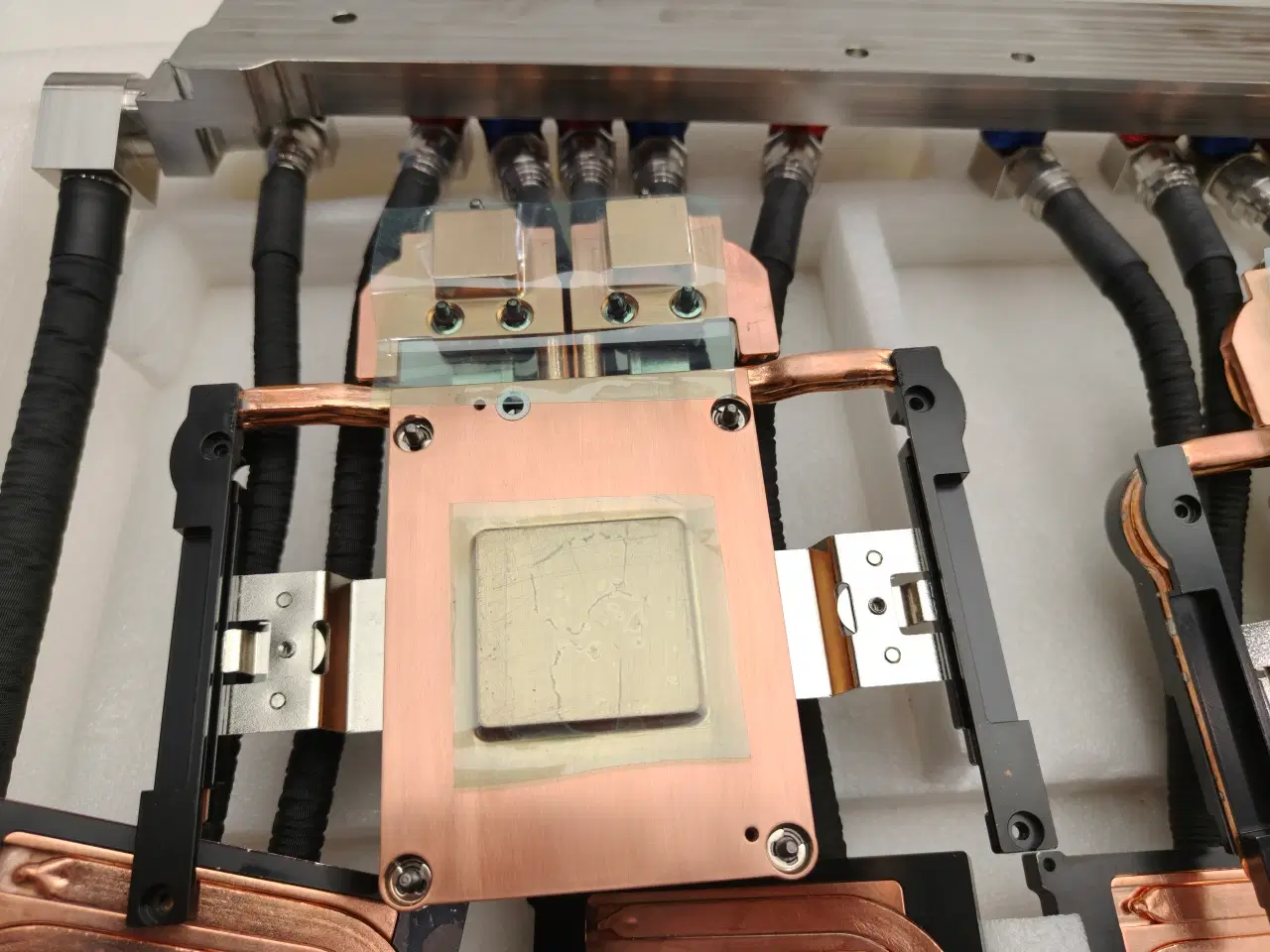
Once single‑chip power exceeds 2000W, conventional cold plate cooling faces physical constraints in heat dissipation density, flow resistance control, and temperature uniformity. In the long run, the industry will inevitably transition toward two‑phase liquid cooling and immersion cooling. However, before that technology shift, there is still significant room to optimise cold plate systems:
Flow path and material upgrades: 3D flow paths, microchannel designs paired with high‑thermal‑conductivity alloys, to enhance heat transfer efficiency.
Thermal‑structural integration: Higher power loads impose greater thermal stresses, demanding improved deformation resistance and leak‑proof robustness in cold plates.
Interface standardisation: Ensuring precise matching of quick connectors and manifolds to guarantee rack‑level assembly efficiency.
3. Preparing for the Post‑2027 Era: Next‑Generation Technology Reserves
To address future scenarios of 2000W+ and even 3600W+, proactive technology development is required:
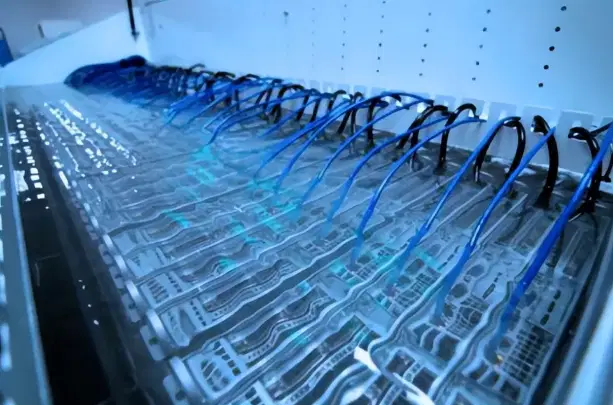
Two‑phase liquid cooling: Master structural sealing, compatibility with high‑pressure coolants, and stability of vapour‑liquid two‑phase flow.
Immersion cooling: Develop auxiliary cooling solutions for localised high‑heat‑flux components.
Building a dual‑track technology moat – “cold plate optimisation + next‑gen reserves” – is essential.
4. Industry Recommendations: Capitalise on the Window, Allocate Resources Wisely
For ODM and data centre operators: Prioritise mature cold plate solutions for GB300 deployments; standardise interface specifications in new projects to reduce future upgrade costs.
For cold plate cooling suppliers: 2026–2027 marks a golden volume‑ramp period. Adopt a dual‑track resource allocation – approximately 70% of resources toward mass production and quality systems to capture market share, and 30% toward early development of two‑phase cold plates and immersion‑assisted cooling technologies. After this window, immersion cooling will accelerate penetration; companies that focus solely on current shipments will lose their first‑mover advantage.
The downward adjustment in Rubin share and the slower ramp have created a 2–3 year window for cold plate liquid cooling. But technology evolution is irreversible. By seizing the current volume opportunity while simultaneously building next‑generation capabilities, industry players can maintain lasting competitiveness in the face of ever‑rising power demands.
We will regularly update you on technologies and information related to thermal design and lightweighting, sharing them for your reference. Thank you for your attention to Walmate.
Scan to follow
测试测试测试测试测试测试测试测试测试测试测试测试测试测试测试测试测试测试测试测试测试测试测试测试测试测试测试测试测试测试测试测试测试测试测试测试测试测试测试测试测试测试测试测试测试测试测试测试测试测试测试测试测试测试测试测试测试测试测试
测试测试测试测试测试测试测试测试测试测试测试测试测试测试测试测试测试测试测试测试测试测试测试测试测试测试测试测试测试测试测试测试测试测试测试测试测试测试测试测试测试测试测试测试测试测试测试测试测试测试测试测试测试测试测试测试测试测试测试
测试测试测试测试测试测试测试测试测试测试测试测试测试测试测试测试测试测试测试测试测试测试测试测试测试测试测试测试测试测试测试测试测试测试测试测试测试测试测试测试测试测试测试测试测试测试测试测试测试测试测试测试测试测试测试测试测试测试测试
测试测试测试测试测试测试测试测试测试测试测试测试测试测试测试测试测试测试测试测试测试测试测试测试测试测试测试测试测试测试测试测试测试测试测试测试测试测试测试测试测试测试测试测试测试测试测试测试测试测试测试测试测试测试测试测试测试测试测试
测试测试测试测试测试测试测试测试测试测试测试测试测试测试测试测试测试测试测试测试测试测试测试测试测试测试测试测试测试测试测试测试测试测试测试测试测试测试测试测试测试测试测试测试测试测试测试测试测试测试测试测试测试测试测试测试测试测试测试
测试测试测试测试测试测试测试测试测试测试测试测试测试测试测试测试测试测试测试测试测试测试测试测试测试测试测试测试测试测试测试测试测试测试测试测试测试测试测试测试测试测试测试测试测试测试测试测试测试测试测试测试测试测试测试测试测试测试测试
测试测试测试测试测试测试测试测试测试测试测试测试测试测试测试测试测试测试测试测试测试测试测试测试测试测试测试测试测试测试测试测试测试测试测试测试测试测试测试测试测试测试测试测试测试测试测试测试测试测试测试测试测试测试测试测试测试测试测试
测试测试测试测试测试测试测试测试测试测试测试测试测试测试测试测试测试测试测试测试测试测试测试测试测试测试测试测试测试测试测试测试测试测试测试测试测试测试测试测试测试测试测试测试测试测试测试测试测试测试测试测试测试测试测试测试测试测试测试
测试测试测试测试测试测试测试测试测试测试测试测试测试测试测试测试测试测试测试测试测试测试测试测试测试测试测试测试测试测试测试测试测试测试测试测试测试测试测试测试测试测试测试测试测试测试测试测试测试测试测试测试测试测试测试测试测试测试测试
测试测试测试测试测试测试测试测试测试测试测试测试测试测试测试测试测试测试测试测试测试测试测试测试测试测试测试测试测试测试测试测试测试测试测试测试测试测试测试测试测试测试测试测试测试测试测试测试测试测试测试测试测试测试测试测试测试测试测试
测试测试测试测试测试测试测试测试测试测试测试测试测试测试测试测试测试测试测试测试测试测试测试测试测试测试测试测试测试测试测试测试测试测试测试测试测试测试测试测试测试测试测试测试测试测试测试测试测试测试测试测试测试测试测试测试测试测试测试
测试测试测试测试测试测试测试测试测试测试测试测试测试测试测试测试测试测试测试测试测试测试测试测试测试测试测试测试测试测试测试测试测试测试测试测试测试测试测试测试测试测试测试测试测试测试测试测试测试测试测试测试测试测试测试测试测试测试测试
测试测试测试测试测试测试测试测试测试测试测试测试测试测试测试测试测试测试测试测试测试测试测试测试测试测试测试测试测试测试测试测试测试测试测试测试测试测试测试测试测试测试测试测试测试测试测试测试测试测试测试测试测试测试测试测试测试测试测试
测试测试测试测试测试测试测试测试测试测试测试测试测试测试测试测试测试测试测试测试测试测试测试测试测试测试测试测试测试测试测试测试测试测试测试测试测试测试测试测试测试测试测试测试测试测试测试测试测试测试测试测试测试测试测试测试测试测试测试
测试测试测试测试测试测试测试测试测试测试测试测试测试测试测试测试测试测试测试测试测试测试测试测试测试测试测试测试测试测试测试测试测试测试测试测试测试测试测试测试测试测试测试测试测试测试测试测试测试测试测试测试测试测试测试测试测试测试测试
测试测试测试测试测试测试测试测试测试测试测试测试测试测试测试测试测试测试测试测试测试测试测试测试测试测试测试测试测试测试测试测试测试测试测试测试测试测试测试测试测试测试测试测试测试测试测试测试测试测试测试测试测试测试测试测试测试测试测试
测试测试测试测试测试测试测试测试测试测试测试测试测试测试测试测试测试测试测试测试测试测试测试测试测试测试测试测试测试测试测试测试测试测试测试测试测试测试测试测试测试测试测试测试测试测试测试测试测试测试测试测试测试测试测试测试测试测试测试
测试测试测试测试测试测试测试测试测试测试测试测试测试测试测试测试测试测试测试测试测试测试测试测试测试测试测试测试测试测试测试测试测试测试测试测试测试测试测试测试测试测试测试测试测试测试测试测试测试测试测试测试测试测试测试测试测试测试测试
测试测试测试测试测试测试测试测试测试测试测试测试测试测试测试测试测试测试测试测试测试测试测试测试测试测试测试测试测试测试测试测试测试测试测试测试测试测试测试测试测试测试测试测试测试测试测试测试测试测试测试测试测试测试测试测试测试测试测试
测试测试测试测试测试测试测试测试测试测试测试测试测试测试测试测试测试测试测试测试测试测试测试测试测试测试测试测试测试测试测试测试测试测试测试测试测试测试测试测试测试测试测试测试测试测试测试测试测试测试测试测试测试测试测试测试测试测试测试